AI in US Healthcare ETL/ELT Systems
Anomaly Detection in Claims Data
Healthcare claims workflows generate large volumes of structured transactions, adjustments, reversals, and remittance events. Traditional rules-based fraud and error detection relies on static thresholds, such as unusually high claim amounts or known suspicious code combinations. Those rules are useful, but they can produce many false positives and miss subtle patterns that vary by provider specialty, payer contract, or region.
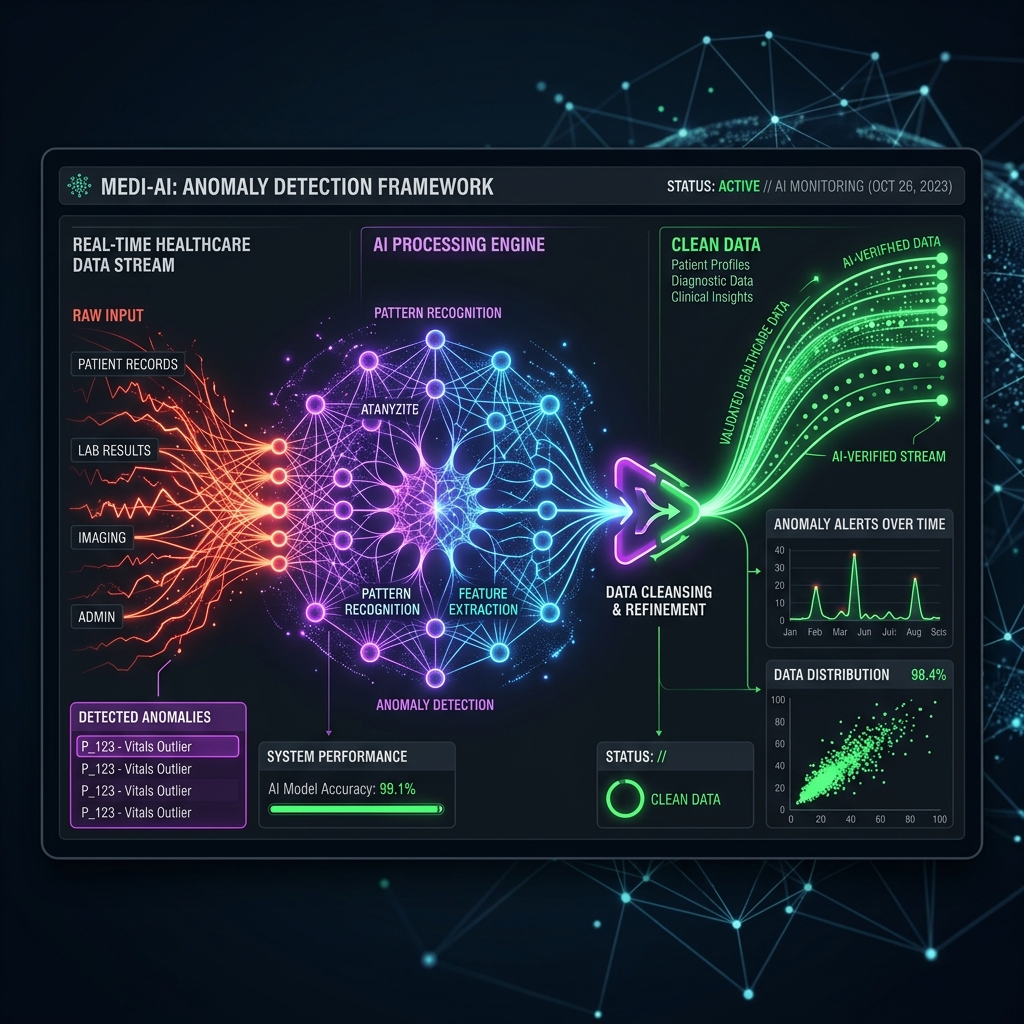
AI-powered anomaly detection can learn expected billing patterns from historical claims and then flag outliers for human review. In an ETL or ELT system, these models can run after raw 837, 835, or claims-table data lands in a staging layer. The goal is not to automate clinical judgment, but to prioritize suspicious or inconsistent records for compliance, revenue cycle, and data quality teams.
AI-Driven Transformation Pipelines
Transformation is often the most time-consuming part of healthcare data engineering. Teams normalize terminologies, resolve identifiers, parse HL7 fields, map C-CDA sections, validate FHIR resources, and reconcile differences between source systems. AI can assist by proposing mappings, clustering similar field names, suggesting terminology candidates, and generating draft transformation logic for review.
These workflows still require governance. Engineers should inspect source data with tools such as the HL7 parser, CCDA viewer,FHIR validator, and flat file viewerbefore trusting automated transformation suggestions.
Data Quality Monitoring Using AI
Data quality monitoring is a natural fit for AI-assisted ETL operations. Models can learn what normal row counts, null rates, value distributions, field lengths, code frequencies, and arrival times look like. When a source system changes an export format or a feed begins sending incomplete data, automated monitoring can alert teams earlier than manual checks.
In production, AI monitoring should complement deterministic validation. Keep exact checks for required fields, schema shape, code systems, and referential integrity, then use AI to find unexpected patterns that rigid rules may miss.