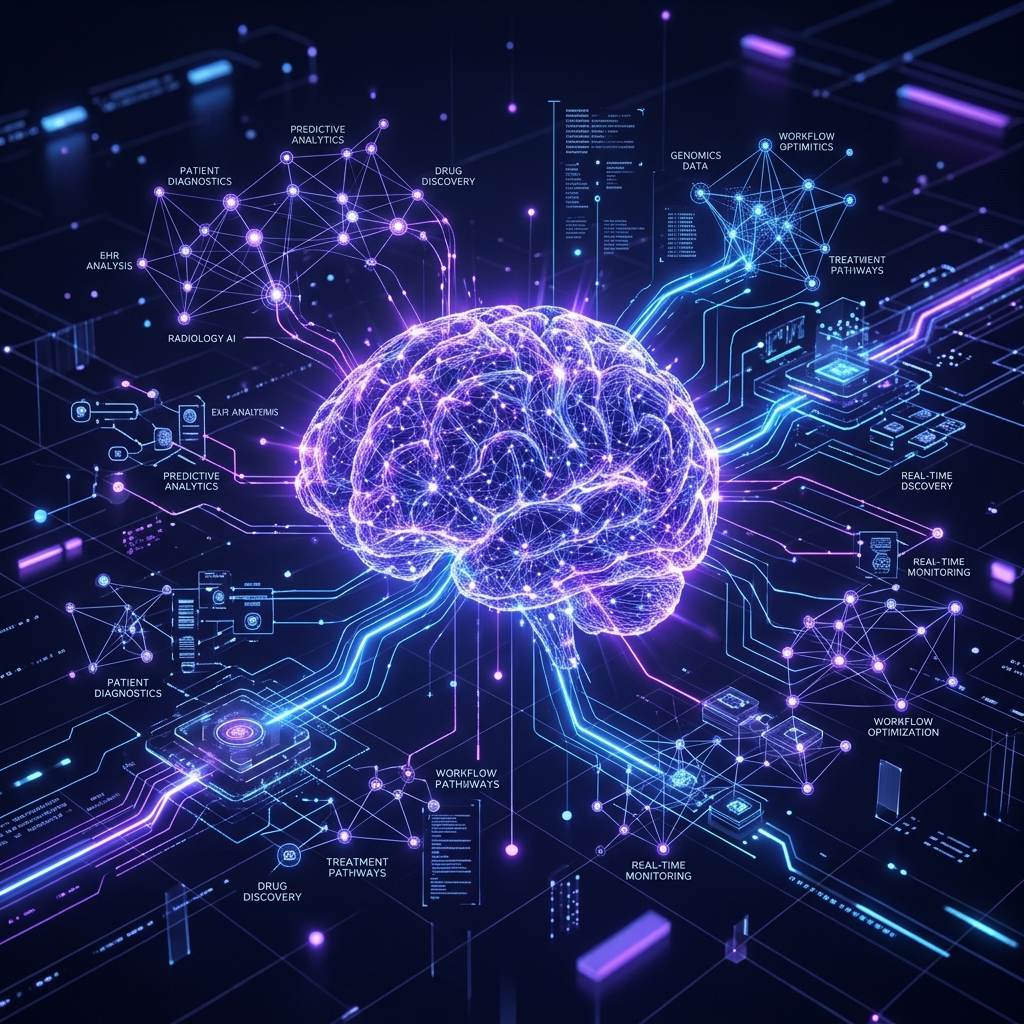
AI in Healthcare Workflows
AI-Assisted Data Cleaning in ETL Pipelines
Healthcare data is notoriously messy. Addresses are misspelled, phone numbers lack standard formatting, and clinical terminology varies wildly between providers. Traditional ETL pipelines rely on massive, hardcoded regex libraries and reference tables to clean this data.
AI-assisted techniques may supplement traditional rules-based approaches by helping teams identify patterns, inconsistencies, or candidate issues for human review. Machine learning models may help infer formatting for unstructured demographic data, potentially reducing pipeline failure rates and manual overhead — though results should be validated by qualified technical and data governance teams.
LLMs for HL7/FHIR Mapping
The transition from legacy HL7 v2 to the modern FHIR standard is one of the most resource-intensive challenges in healthcare IT. Historically, interface engineers manually mapped custom Z-segments in HL7 to specific FHIR extensions.
Large Language Models (LLMs) are being evaluated for this process. By training LLMs on existing interface specifications and FHIR implementation guides, engineers may be able to generate draft mapping scripts for human review. While human review remains necessary, AI-assisted tooling may help reduce the time required to build an interface — though mapping quality depends on training data, model accuracy, and organizational validation processes.
Automation in Claims Pipelines
Beyond clinical data, AI-assisted tools are being explored for revenue cycle workflows. Denied claims cost the US healthcare system billions annually, often due to minor coding errors or missing documentation.
AI validation models may help teams proactively review 837 claim files before submission. By comparing coded claims against unstructured clinical narratives using Natural Language Processing (NLP), these systems may flag discrepancies and recommend candidate corrections for human review. These models should not be treated as a guarantee of reimbursement, compliance, billing accuracy, or clinical correctness. All flagged items should be reviewed and validated by qualified billing, clinical, and compliance teams.
Where Human Review Still Matters
AI-assisted workflows should support healthcare engineers rather than bypass review. Teams should validate source messages with an HL7 parser, inspect clinical documents with a CCDA viewer, and validate generated resources with a FHIR validatorbefore using automated mappings in downstream or organization-approved workflows. AI-assisted outputs should not replace required validation, governance, clinical review, billing review, or compliance processes.
Frequently Asked Questions
Can AI automate healthcare data mapping?
AI can assist draft mapping, data cleaning, and anomaly detection, but clinical and interoperability teams should still review production mappings.
Where does AI help in HL7 to FHIR workflows?
AI can help summarize interface specs, propose field mappings, detect inconsistent values, and generate transformation drafts for human review.